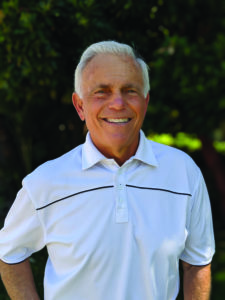
Q: What are the core beliefs that guide your money management?
A: The core of our philosophy is that we consider picking stocks as selecting business. We invest in businesses that are run well, not just in stocks, chart movements, trend analyses, or the recent relative strength stocks. Of course, we do want our stocks to do well, but our screening process begins with a search for companies with good fundamental metrics.
Another key element of our philosophy is the dividend. The original name of the fund, which was launched in 2003, was “Neiman Enhanced Dividend Fund.“ We look for dividends that are stable and show evidence of growth. In addition, we enhance the dividend through writing covered calls.
The dividends are important in more than one way: first, the market tends to support stocks that pay healthy dividends, and second, the dividend explains the philosophy of the company itself. Those companies constantly aim to hold up and increase their cash flow and to share it with their shareholders.
By prospectus, at least 80% of the fund is invested in large-cap U.S. stocks with a minimum capitalization of $5 billion, good cash flow, and low debt levels. The stocks we chose may be boring, but these are low-debt, dividend paying companies that we feel can withstand the upcoming recession that everybody is worried about. Overall, we focus not only on trying to outperform the market, but also on providing downside protection.
We are definitely not a top-down asset allocator. Of course, we are aware of the industry in which the company operates, but we don't allocate the portfolio to gain a specific exposure in any one industry. We may have occasional sector overweight but, typically, the fund is well diversified across industries. The idea is to invest in industry leaders across various industries. We have no preconceived industry bias in our selection process.
Q: What would you consider a good dividend? Could you explain in more detail the dividend enhancement system?
A: A good dividend in today's market might be 2%; the best dividend might be 4%. Over the years, we have devised a system for handling individual accounts and we write covered calls. If two stocks are otherwise equal, we would prefer the one with the better call options.
Writing covered calls brings in the cash flow and that's how we enhance the dividend. Let's say that we own 1,000 shares of company X that we bought for $50. Instead of focusing on numerous scientifi c models that can be either right or wrong, such as the dividend discount model or the target price, we just look at the option premium for X four months from now at $55. Then we make the decision.
If in four months, X went from $50 to $55, and we also picked up $2 in premium and $0.50 in dividend, that's in excess of 20% potential return in that stock, and it didn't have to go to $80. But we don't prognosticate whether that will happen or not. Because of the $2 in premium, our cost was not really $50, but $48. So, in the case of drop of 10% in the stock, we would lose less than 10%. We've made a contribution to the protection of the downside.
We do that across the board, not necessarily selling options on every single stock. We have learned that when the stock market makes a great move, stocks go from $50 to $55, even to $65, and we're not going to give up the upside on all the stocks. This strategy has helped us keep up with the market in positive years, such as 2007, and lose less when the market is down. Of course, our portfolio can go down, but we have a focus on helping protect our clients from the downside as well.
Q: What fundamental metrics do you use to select companies?
A: We invest in large-cap domestic stocks that pay dividends. Since these generally consist of 80% of the portfolio, we still have enough fl exibility to invest part of the fund elsewhere, if we fi nd attractive opportunities. We have had a few foreign stocks in the portfolio, but that's not the primary exposure.
We have a staged screening process that has evolved since 2003. Through several screening tools, we isolate the large-cap stocks that consistently show healthy revenue, revenue growth, return on equity, debt-to-equity ratio, and the level of the dividends. We also screen for the common value metrics, such as price-to-book, price-to-earnings, and price-to-cash fl ow to make sure that we are buying value. For example, we may screen only for companies with price-to-earnings of less than 25. That might be our initial screen and from here on we tighten the selection process further using multiple of criteria as I mentioned earlier.
Q: How do you measure earnings quality?
A: We try to keep it simple. All the screening and valuation is done on a relative basis, as the entire stock market exists on a relative basis - stocks are compared to each other and to the benchmarks. my way of keeping it sim ple is running the fund as a comparison of businesses. I don't do in-depth measure of the quality of earnings, because the end result, the performance, is really about the various industries and investors' perceptions of the various stocks.
I do not use any analysts' opinions or research from proprietary fi rms, because those professional opinions have a lot of bias. It is the market bias that is the most objective one, in my opinion. Therefore, my research has to be based on the same research available to any investor who has access to a computer, such as the information published by S&P, yahoo!, or Bloomberg.
To me, the quality of earnings doesn't really relate to the constant monitoring of a full portfolio that's diversifi ed. If a stock falls below our alerts on the downside and we unload it, that loss might not hurt our portfolio. If the entire economy goes down, then we're all in the same boat anyway. The bottom line is that I have a very practical approach for running the fund. I am not sure if this approach is unique, but it is one we are comfortable with.
In relation to P/E ratio, typically, I use the historical earnings derived from the published fi nancial reports. For the P/E ratio, I use the trailing 12-month screen, while for the earnings growth I use threeyear period.
Q: Could you give us some examples of stock picks that illustrate your research process?
A: I have no favorite stocks; there may be even companies that I do not know much about, until we add them to our portfolio. I selected them because of their strong fundamental numbers that meet our requirements. When a stock no longer meets our criteria, we eliminate it and it is forgotten. We may revisit it six months later, if all of a sudden business performance improves and it reappears on our radar.
There are some 40 stocks in the fund and we follow them during market hours. That means that I know how they are doing and how they compare to the market in general. The biggest concern of investors seems to be how they are doing compared to the market, so I measure how we're doing for our clients compared to market indexes such as S&P 500.
If a stock is down a couple of dollars today, it could be for a variety of reasons. It might be down just because it is a volatile stock. If a company is run well, it can withstand some volatility, which is often part of the business.
Basically, once we've made the original selection process, running a portfolio means monitoring and knowing how the stocks are doing. We're investing in businesses with managers doing their best running their companies. It is their job.
Q: What would trigger a sell decision? How would you describe your sell discipline?
A: If one of our stocks goes down by 20 percent, for example, and the rest of our portfolio is not down, we would have to rethink that stock. If the market is up, we would examine the stocks that are down in our portfolio, because they are acting contrary to the market. Then we would take a hard look and shore up the process.
I believe that I do have an obligation to my investors to manage the portfolio and I have an additional motive for doing well, because I have my own money into the fund. So, I do my best to tighten up the portfolio whenever possible.
Q: You mentioned that there are some 40 stocks in the fund. What is the typical number of stocks you hold in the fund?
A: We're still a small fund, but we've recently grown from $5.5 million assets under management to almost $9 million. morningstar awarded us fi ve stars in February and, as a result, we have enjoyed signifi cant growth. Prior to that, however, the fund was about $3 million. Within that range, you can't buy 100 stocks until your fund get bigger. Therefore, we keep around 40 stocks in our fund right now.
I don't think that we need 100 stocks to diversify. We look for the best companies across various industries, and some studies indicate that you are well diversifi ed at 25 stocks, if you cross industries. you can also monitor the stocks better if they are a more manageable number. The goal is to avoid over-selection. So, the number of stocks may increase to 60, when the fund grows to $200 million. I think it is a question of adapting to the situation, but within the philosophy and the discipline, and avoiding a style drift.
Q: What risks do you perceive and how do you monitor and control them?
A: One form of risk is the stock market risk that every investor faces. We also face that same risk, and there is not much any one individual can do to change that. There is another form of risk which is individual stock risk. I think dealing with that risk with our strategy is self-evident. Picking the companies with the best numbers through our screening and investigation process, greatly diminishes the price volatility, especially when you buy companies that pay dividends. The market supports the stocks that pay healthy and growing dividends, because such companies, typically, have a focus on increasing the free cash fl ow and returning it to the shareholder. The low-debt criterion also helps to diminish the individual stock risk. So, the downside protection is embedded in the selection process, which aims at a fundamentally strong portfolio.