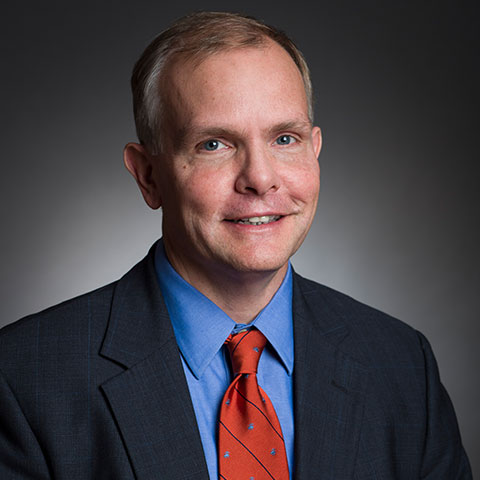
Q: How would you describe your investment philosophy and the core beliefs that guide your process?
A: We run a balanced fund and we allocate the portfolio between equities, fixed income, and cash. We look at both domestic and international economies, and approximately 19% of our assets are invested outside the United States.
We invest in forward-thinking companies with sustainable business models. An important part of our philosophy is that, along with the rigorous financial analysis, we apply environmental, social and governance, or ESG criteria. Those two perspectives and the increased level of scrutiny help us to find companies with proper governance that are likely to outperform financially.
On the equity side, we're thematic and sector-oriented investors, looking for themes that will outperform the broader markets. On the bond side, we are very conservative and we invest primarily in government securities and investment grade corporate bonds.
Q: What's your investment strategy and process?
A: The process starts with a top-down approach of analyzing economies that could offer better opportunities. And while in the U.S. the growth is slowing down, there are still pockets of growth abroad.
To allocate the portfolio, we analyze GDPs, interest rate levels, macro environments, and equity valuations both in the U.S. and abroad. We evaluate if stocks or bonds offer better total return to make the allocation. Typically, we look at the earnings yield in various markets versus the 10-year Treasury yield, and it has to make sense for us.
When we get down to the stock selection, we employ a growth-at-reasonableprice, or GARP approach, and relative value analysis. Our portfolio is composed primarily of large-cap growth companies that are industry leaders. We look for strong management teams, strong balance sheets, and consistent earnings growth.
One of the most important metrics that we use is the PEG ratio, which shows what we pay for this growth. We compare the companies to their peers to find the most attractive ones, and we look at return on equity, return on assets. When applicable, the discounted cash flow analysis derives another price target to back up the PEG ratio analysis.
Regarding the bond selection, the fund has been very conservative, which is quite fortunate in this environment. We primarily invest in government agency bonds with short duration, so we don't take big interest rate bets. We also invest in corporate bonds of investment grade or higher. To a lesser extent, we own mortgage-backed securities, so the impact of the sub-prime crisis has been minimal.
In terms of cash and equivalents, I have never viewed them as a long-term investment strategy. We would raise cash only when we feel that things are getting a little frothy in the market. But, typically, we use our own Pax World Money Market Fund, which is screened for ESG criteria. We also invest in two community development banks, which provide loans to under-served markets.
Q: How do you decide on your international exposure? In which markets do you invest?
A: We have been long-term investors in foreign markets. When I became a portfolio manager about ten years ago, the portfolio had zero exposure overseas, and one of my first decisions was to change that. Now our international exposure stands at about 19%, and it has helped us in more than one way.
First, it helped us with the weak dollar and, second, it provided us better growth opportunities, particularly in emerging markets like Brazil. We have large exposure to Europe and smaller exposure to Japan and China. To play the weak dollar theme, we focused the portfolio on large-cap growth companies with high international sales because the weak dollar made their products more attractive. Cisco Systems, for example, has been a core holding for quite a few years. John Deere is our largest holding as of the end of 2007.
Q: What other major themes do you explore, besides the weak dollar?
A: Agriculture and commodity prices, particularly food, have been a long-term theme of ours, as food crop prices have had a tremendous run. John Deere is a good example of a stock related to that theme; the company sells equipment to farmers. It has very strong management and has been a stellar performer.
More recently, we have been utilizing our commodity ETFs to get more exposure to the sector. Mining companies typically have many environmental issues and it is difficult for us to get exposure. We have focused on Deutsche Bank Agriculture Fund ETF, which represents the top four commodity food crops. We also invest in GLD, which is the StreetTracks Gold ETF. So, we have a basket approach towards commodities, but John Deere is our major investment.
Another theme is infrastructure throughout the world, not just in the U.S. An example would be ABB, a Swiss engineering and construction company, focused on rebuilding power grid infrastructure in places with rolling blackouts like South Africa. Even in the U.S. we've had issues in California, so that's definitely a theme that merits investment.
Because of our ESG criteria, the alternative energy would be an obvious choice, but many of those companies are too small. However, we have found largecap companies with exposure to solar production. We hold Applied Materials, for example, which has a solar division that has helped to offset the slowdown in the semiconductor business. Another company we own is MEMC Electronics, a semiconductor company that manufactures silicon wafers, a primary component in solar panels.
Q: How do you assess the drivers and the turning points of the secular growth stories? Certainly, not all the growth themes lead to rising company profits.
A: That's right. Some of the alternative energy investments can be quite risky and speculative, but we have found a good way to play the solar energy theme through larger companies with the expertise and the ability to make significant investments.
The same refers to the weak dollar theme. Economically, we have seen soaring budget deficits and substantial spending by this administration. We felt that the dollar would be under significant pressure years ago, and we believed that was a long-term theme. Therefore, we implemented our strategy of international exposure to protect the shareholders against a weak dollar.
The greatest challenge with thematic investing is getting in at a positive turning point and getting out at a negative one. At PAX, we have a team approach, where I draw on the expertise of portfolio managers with different disciplines. While I have a top-down approach, I also rely on value managers with bottom-up approaches, high-yield managers that look at the fixed income markets, etc.
The crucial part is that we always look at the themes from different perspectives, and that adds value. Applying the ESG criteria has also been a good identifier of turning points and themes, such as water, for example. With all the focus on oil, people often forget that water is probably a more important concern, so the ESG research has definitely added value to our process.
Q: What benchmarks do you use and what is your buy and sell discipline?
A: Our benchmark is the Lipper Balanced Funds Index, which is comprised of the 30 largest balanced funds in the U.S. We are one of its members, so that's the right index to be compared to. The portfolio includes about 103 equity positions and 200 bond positions. However, those are mainly government and agency bonds with different maturities, so it wouldn't be fair to count them as 200 different positions.
We have a very strict sell discipline. When we buy a company, we write a buy report with the reasons for investing. Once the stocks are included in the portfolio, we establish price targets. When they reach those price targets, we review them to decide whether to reduce or eliminate those positions.
As a risk-control measure, we wouldn't invest more than 5% of the fund in any single issue. When a position reaches 3% of the portfolio, that's a trigger to review the company. Even if it is still undervalued and has good growth prospects, we would typically trim the position. For example, America Movil has been in our portfolio for about eight years, but we have systematically trimmed it. Capital appreciation that resulted in an overweight, is a great reason to trim a stock.
We would also sell a company if it fails to meet our ESG criteria because of a merger or a change in the policy. In that case, we must eliminate it in six months.
Q: What risks do you perceive and how do you control them?
A: The GARP approach is part of the risk control as we wouldn't invest in a company's growth at any price. The other major risk control is diversification, which is crucial for running a balanced fund. We use asset allocation as a way to mitigate risk, and we utilize our fixed income component as a buffer for volatility.
On the sector level, I don't agree with the managers who totally avoid sectors they don't like. I feel that we have to be represented in all sectors but with different weightings. We look for companies that can still thrive, even when the sector is out of favor.
A perfect example of that approach is our long-term holding GameStop, which sells video gaming software and hardware. The consumer has been hurt by higher food and energy prices, but he still buys video games. The company makes a lot of money from used games, which have even higher margins, and became one of big dealers in this market. So, we are down on consumer discretionary, but there are still pockets worth of exposure, especially in a potentially recessionary environment.
We run the portfolio thorough various shock scenarios, and we do the Value At Risk measurement, which keeps us aware of all the sector and industry risks we take, and we may trim positions based that analysis. Also, we don't invest in companies with less than three years of continuous operations, and we primarily invest in very liquid equities and in high quality, liquid bonds.
Q: What are the components of the ESG criteria and how many companies meet those requirements?
A: We look at the company's corporate governance, its environmental record, its work force diversity, its health and safety track record, and its policy on remedying past problems. We have a database of about 700 to 800 stocks that currently meet our ESG criteria and this is a large enough universe. It is a bit more challenging to get the necessary data in the emerging markets, but we have found plenty of international companies that meet our criteria. We don't need to sacrifice performance because our universe is smaller; we can participate in most areas and benefit from the additional analysis.