Q: How has the fund evolved in recent years?
The Equity Income Fund has been around since 1939, when it used to be a bond fund. Since 2000, it has invested primarily in dividend-paying equities, so it has a track record of 15 years. I joined the firm in 2001, when it was called WM Advisors, and became head of the equity team in 2005.
At the end of 2006, the company was purchased by Principal and rebranded as Edge Asset Management. There are two co-portfolio managers. Dave Simpson has been co-manager since 2007, while I formally became co-manager of this strategy in 2010.
Q: What is your investment philosophy?
Our philosophy is investing in good businesses that have both the capacity and commitment to grow dividends, because we believe that good businesses become good stocks to own. We are not a deep value player and we are not a growth manager. We are looking for companies with competitive advantage within their industries, which can generate enough free cash flow to grow their business and pay a meaningful dividend.
To us dividend is very important. Every company we invest in has to pay a dividend, because we believe that paying a dividend is a signal of a good business.
We aim to buy businesses when they trade at a discount to our estimate of their intrinsic worth, looking over a longer-term investment horizon of five years. Our goal is to obtain both the yield and the capital appreciation, so that the investment can compound at a double-digit rate over a five-year period.
Q: Do you have a specific requirement for the dividend yield?
Yes, we look for companies that pay a meaningful divided with yield of above 2%. It may vary slightly for different industries, but we want a commitment, not a token dividend.
The dividend, however, is only the first step. We also make sure that we buy a good quality business with balance sheet and characteristics that allow it to grow. Overall, we invest in companies that can grow faster than the economy and their peer group.
Q: What is your investment strategy?
We are bottom-up stock pickers and we do all of the research here to find companies that can grow in any economic environment.
Because of our long investment horizon, we can afford to be patient and to wait until there is a misperception on Wall Street of the long-term story of either the industry or the company. In that way, we make investments when there is an absolute discount to our estimate of what the company is worth, or a relative discount, because our fund is fully invested all the time.
Our portfolios are sector neutral, because we believe that over a five-year period, every sector has its day in the sun. We aim to find the best businesses in each sector. If those companies outperform their sectors in the five-year period, then our fund outperforms the benchmark.
Q: Could you explain your research process? How do you look for opportunities?
All the investment ideas are generated from the fundamental research performed by the team. Additionally, both Dave Simpson and I grew up as analysts in the industry, so the process is truly driven by bottom-up analysis.
We break up the stock market into 45 industries and each analyst covers nine industries. The industry reviews, regularly prepared and updated, represent our view of the supply and demand dynamics of that industry over the next four to five years.
Overall, we focus on the trajectory of the industry—whether the industry is getting better or worse—as well as other trends that may affect the industry. For example, active safety is currently a big theme for auto suppliers. Active safety is the ability of the car to send out signals and to react to what is happening around it, while passive safety is seatbelts and airbags. We believe that active safety is going to be a huge driver of returns in the market over the next decade.
Once we screen the companies that pay a meaningful dividend of 2% or higher, we remove those for which the dividend is potentially unsustainable. If their balance sheet or cash flow cannot support the dividend, we are not interested.
The companies that come out of the screen, as well as the companies already in the portfolio, are incorporated in the industry review. The analysts evaluate each company over our long-term investment horizon to determine which ones are the quality businesses that we would like to own.
At that point, we evaluate only the business, not the price of the stock. We rank the companies in terms of five criteria: competitive advantage, complexity of the business model, financial strength, shareholder friendliness, and the potential for a change in the profitability that would be a surprise to Wall Street. Based on these five criteria, each company receives a score and the companies with the highest score are those that we would like to own.
Once we have identified the potentially interesting companies, we value them over a five-year period and generate a target price. We use different valuations for the different industries. For example, we use normalized price EBITDA for industrials, dividend discount model for staples, and price-to-book for financials.
Then we monitor those companies and when they get to the right price, we may add them to the portfolio. Typically, the opportunity arises when the market goes down in a sector, industry, or a company. However, if we already own a similar company and a good business, we will not necessarily sell that one to buy the other, if they both represent the same value.
Q: How do you quantify shareholder friendliness? Could you explain the rationale behind your criteria?
Shareholder friendliness can be measured by the tangible commitment of the management to return money to shareholders, namely, the consistently growing dividend and the propensity of the company to raise the dividend over the next five years. If a company is raising its dividend faster than the average company, that company will score very high. Additionally, if management has been able to make accretive acquisitions historically or buy back stock at attractive valuations, that also positively impacts the company’s shareholder friendliness score.
Competitive advantage is more subjective. It could be patent protection, cost advantage, brand or management that gives the company a sustainable advantage that will allow it to take share and, over time, to grow faster than the industry and the marketplace.
Financial strength is statistics. We look at the variability of the operating margin. Companies with average return on capital of 12%, which make 30% in one year and 0% in the next, would have a lower score than companies with sustainable annual return on capital of 13% or 14%. We also examine the metrics of the balance sheet.
Overall, some of the metrics we use are objective, and some are subjective. Our dominant eye is bottom up, but we have to be aware of the big picture as well. While we use objective data, like statistics and financial reports, to evaluate historic performance, we make a projection, which always involves some subjectivity.
Q: Could you give us some examples of specific investments?
One of the companies we identified as a good business is Autoliv, Inc, which is among the world leaders in the production of airbags and seatbelts. A few years ago, our analysts performed an industry review and identified it was a little expensive, but a good business.
Its competitive advantage was the market leadership and the cost advantages in airbag manufacturing. The management had consistently raised the divided at above market rate. Autoliv had a very strong balance sheet and the company was investing in active safety, which we expected to become a big market.
Then the stock went down substantially, following a price fixing investigation. We believed that the decline was discounting far in excess of even the most egregious fine. We felt this was a great opportunity to add the company to the Fund. At that price, we were paying a discount just for their base business, while getting the potential of active safety for free. At the same time, the yield was healthy at about 3.0% or 3.5%.
Subsequently, the regulatory case was settled for a token amount of money. The company went on to take greater market share in airbags and seatbelts, while its active safety business started to take off. That’s an example of how our rankings brought out a good business, while the dislocation regarding price fixing gave us the opportunity to buy the stock at a very attractive price.
Another example is Apple, Inc, which represents the largest position in our portfolio. In 2012, when Apple introduced the iPhone 4 and the first generation of the iPad, its stock price ran up substantially. Subsequently, it fell to about 40% when investors became concerned that future growth might slow. We disagreed that growth was really slowing in the long run and the price decline gave us an opportunity to purchase a stellar franchise at a below market P/E, with a strong balance sheet and a 2.5% dividend yield.
Apple has an ecosystem that gave them a competitive advantage in the marketplace. The unique features of their products plus the integration of their cloud services like Apple Pay and iTunes we believed would keep current customers loyal and allow Apple to gain meaningful share from competitors around the world.
As our thesis played out Apple has subsequently risen to record valuations, and we continue to be enthusiastic about their future prospects.
Q: What is your portfolio construction process? Could you explain your buy-and-sell discipline?
We have about 80 holdings on average and our benchmark is the Russell 1000 Value. Since we are sector neutral, we are very cognizant of the sector weights, but we spend little time thinking about the individual company weights in the benchmark.
The portfolio construction begins with the companies we are investing in. When you look at the statistics of our portfolio, the companies have better return on capital, return on equity, and stronger balance sheets than the companies held in the benchmark. Our goal is to have a portfolio made up of better companies than the index.
Our average position size is typically 1.25% to 1.5% of the portfolio. We start with 50 basis points and trade into the stock. Since we buy the stocks when they are out of favor, they may underperform in the short term but in three to four years we tend to achieve outperformance. The major drivers of the portfolio in any calendar year are typically stocks that we bought two or three years ago.
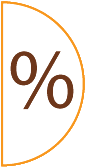
Our portfolio turnover is about 20% with about half of that from trimming or adding to positions. We only add eight to 10 new investment ideas per year on average. That eight to 10 stocks do not change the characteristics of the portfolio very much over the next 18 to 24 months.
Although our target price is based on a five-year horizon, our analysts review each industry every 18 to 24 months. If a company is moving towards its target price, the review evaluates the next four to five years. If the value is rising, our target price for the next five years may be moving up too.
We would sell or trim a stock when it has reached its target price ahead of our horizon. When the stock gets above a 3% position size, we would start to trim it.
Q: How do you define and manage risk?
The biggest risk is losing money for our investors. Then comes relative performance, because we are fully invested. Our job is to find good investments that will make money over the long run but, ultimately, we want to outperform the market every year. When the benchmark goes down, our portfolio is likely to go down as well, but our focus is on making sure we go down less. Typically, we outperform over the five-year horizon, but we do much better when the market goes down.
We are broadly diversified and that minimizes risk. We believe that you add risk when you attempt to time sectors, therefore being sector neutral is another form of risk management.
For the last four years, we have used a third-party risk analysis tool called Barra One. This software tool allows us to analyze our portfolio for unintended risks and provides another layer of risk management for our clients.
And finally, we have an Investment and Risk Committee, which meets quarterly to review all of Edge’s strategies to make sure we are managing them in compliance with investment guidelines and the objectives of each strategy.