Description
One of the three satellite legs is based on the New York Stock Exchange Bullish Percent (NYSE BP)—a measure
of the percent of stocks being controlled by demand. At the end of every day, all of the stocks on the NYSE are
effectively put in two piles to identify whether the trend shows a buy or sell signal. It’s like knowing when to
switch your game from offense to defense. When the NYSE BP shows a buy signal, the idea is to go on offense
by using one of Dorsey Wright’s domestic ETF models.
When it instead indicates a more defensive signal, a defensive position is taken such as setting stop-loss limits and/or moving to cash. The other two legs of the approach are managed using DWA’s Dynamic Asset Level Investing (DALI) Level 1, which consists of six different asset classes: domestic equities, international equities, commodities, currencies, bonds and cash. DWA runs a proprietary screening process based on the technical strength and weakness of each asset class. It’s like an ongoing tournament where the top-ranking finalists win.
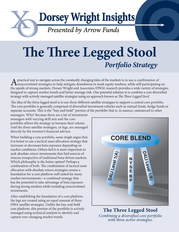
This tournament is run daily, constantly looking for new leadership. The top two ranking asset classes, based on the DALI analysis, would represent the remaining two legs of the strategy through the use of individual securities, index funds, ETFs and other asset-class specific investments. The ultimate goal of using a three legged approach is to create a dynamic portfolio by combining a core blend of buy and hold investments with complementary satellites of active management based on technical analysis. By doing so, you’ll have the potential to take advantage of valuable growth opportunities while simultaneously mitigating risk. This illustration shows a sample allocation model for the Three Legged Stool approach. 25% of the portfolio is allocated to the core “buy & hold” blend, a mix of tactical asset allocation and absolute return investments. Then for the three legs, which represent the active portion of the strategy, the illustration uses 25% each based on the three DWA indicators— NYSE BP, DALI level 1 (Asset Class 1), DALI Level 1 (Asset Class 2). Image shown for illustrative purposes only. Definition of Beta: A measure of an investment’s volatility relative to a benchmark, often the S&P 500. A Beta of 1.0 is considered to be identical to the benchmark.
The higher or lower the beta, the more or less sharply an investment might be expected to fluctuate in relation to the benchmark. The information provided is intended to be general in nature and for illustrative purposes only and should not be construed as investment advice. The information is subject to change based on market and other conditions and should not be construed as a recommendation of any specific security or investment product. It was prepared without regard for specific circumstances and objectives. The strategies shown may not be suitable for all investors.
The appropriateness of an investment or strategy will depend on many factors, including, but not limited to, the suitability, circumstances and objectives of the investor. This investment strategy involves risks, including the possible loss of principal. 0972-NLD-8/18/2009 .
When it instead indicates a more defensive signal, a defensive position is taken such as setting stop-loss limits and/or moving to cash. The other two legs of the approach are managed using DWA’s Dynamic Asset Level Investing (DALI) Level 1, which consists of six different asset classes: domestic equities, international equities, commodities, currencies, bonds and cash. DWA runs a proprietary screening process based on the technical strength and weakness of each asset class. It’s like an ongoing tournament where the top-ranking finalists win.
This tournament is run daily, constantly looking for new leadership. The top two ranking asset classes, based on the DALI analysis, would represent the remaining two legs of the strategy through the use of individual securities, index funds, ETFs and other asset-class specific investments. The ultimate goal of using a three legged approach is to create a dynamic portfolio by combining a core blend of buy and hold investments with complementary satellites of active management based on technical analysis. By doing so, you’ll have the potential to take advantage of valuable growth opportunities while simultaneously mitigating risk. This illustration shows a sample allocation model for the Three Legged Stool approach. 25% of the portfolio is allocated to the core “buy & hold” blend, a mix of tactical asset allocation and absolute return investments. Then for the three legs, which represent the active portion of the strategy, the illustration uses 25% each based on the three DWA indicators— NYSE BP, DALI level 1 (Asset Class 1), DALI Level 1 (Asset Class 2). Image shown for illustrative purposes only. Definition of Beta: A measure of an investment’s volatility relative to a benchmark, often the S&P 500. A Beta of 1.0 is considered to be identical to the benchmark.
The higher or lower the beta, the more or less sharply an investment might be expected to fluctuate in relation to the benchmark. The information provided is intended to be general in nature and for illustrative purposes only and should not be construed as investment advice. The information is subject to change based on market and other conditions and should not be construed as a recommendation of any specific security or investment product. It was prepared without regard for specific circumstances and objectives. The strategies shown may not be suitable for all investors.
The appropriateness of an investment or strategy will depend on many factors, including, but not limited to, the suitability, circumstances and objectives of the investor. This investment strategy involves risks, including the possible loss of principal. 0972-NLD-8/18/2009 .